
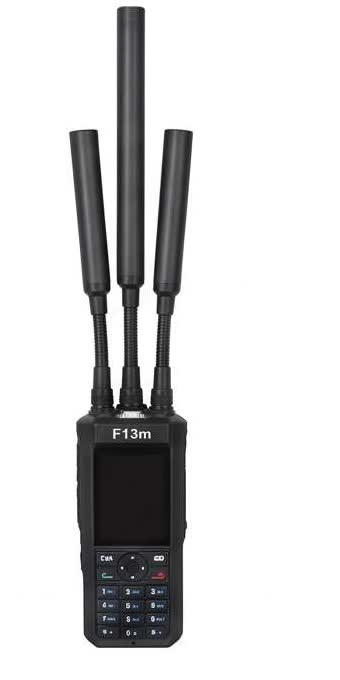
Not every drone jammer fits every job. A handheld gun that works for a patrol team is the wrong tool for a fixed site, and a jammer that covers the wrong bands does nothing at all, however powerful it is. Before comparing models, it helps to understand the four things that decide whether a jammer will work for you: the bands it covers, the range you actually need, the form it comes in, and whether you need detection first.
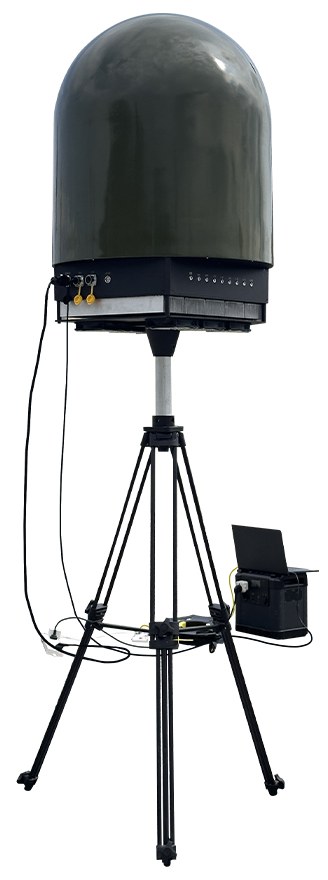
You cannot jam a drone you cannot find. Detection is the first layer: a detector tells you a drone is there, what band it uses and roughly where it is, and jamming is the response that follows. A handheld detector like the F13M sweeps 300 MHz to 13.4 GHz and picks up more than 100 drone types at up to 5 km, enough for a patrol team to find the threat first. For a fixed site, a fixed detector such as the APX-DF-10G covers 70 MHz to 10 GHz with direction finding out to 10 km. If your site has no detection at all, buy that before you buy jamming power.
Most consumer and FPV drones are controlled and watched over a small set of radio bands: 2.4 GHz and 5.8 GHz carry most control links and video, while 433 MHz, 900 MHz and the 1.2–1.5 GHz range appear in longer-range and custom builds. A jammer only works on the bands it transmits on. The common multi-band layout — 433, 900, 1.2, 1.4, 1.5, 2.4, 5.2 and 5.8 GHz — exists precisely because no single band covers every drone. Before you choose, list the drones you expect: a DJI Mavic and an FPV quad do not use the same links, and a jammer built for one may miss the other. The APX-DJH-8B gun, for example, jams six channels at 180 W and detects from 300 MHz to 6.2 GHz, which is why it is used against mixed FPV threats rather than a single model.
The bands most jammers cover, and what usually flies on them:
| Band | Commonly used for |
|---|---|
| 433 MHz | Long-range control links |
| 900 MHz | Long-range control and telemetry |
| 1.2–1.5 GHz | Long-range video and custom FPV links |
| 2.4 GHz | Most consumer drone control and video (DJI, FPV) |
| 5.2 / 5.8 GHz | FPV video and control, high-bandwidth links |
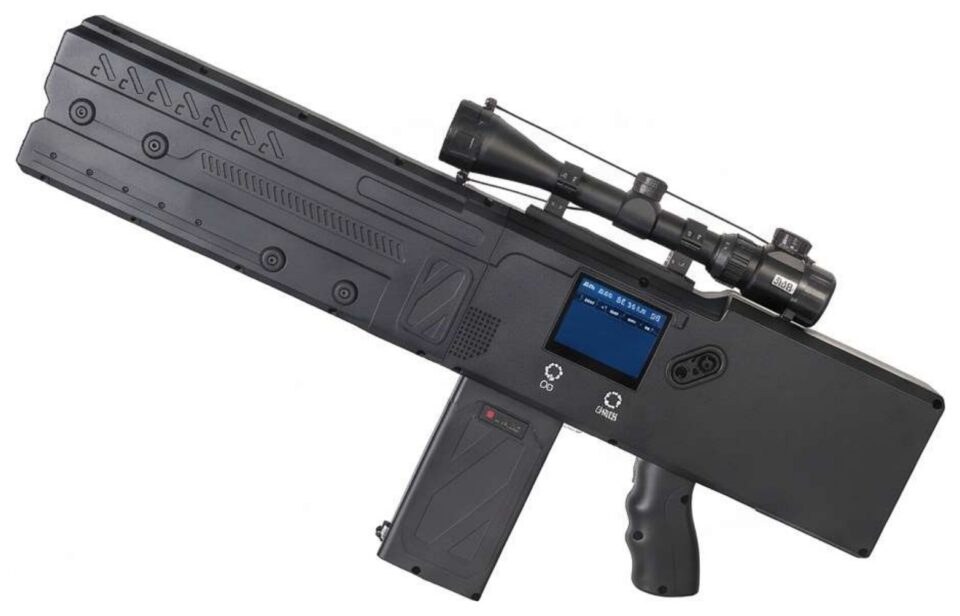
Jamming range is often quoted as a single number, but it is really a contest between two signals: the jammer’s and the drone’s link to its operator. A jammer that reaches 2 km against a drone 500 m from its pilot may reach much less against one 5 km from its pilot. That is why fixed systems quote directional ranges — the APX-DJF-Hex8B jams 2–3 km in the direction its array faces, and the spherical APX-DJF-9B covers 1–2 km — and why handheld guns are rated around 1–2 km. More power does help, but it also costs weight and battery life. Treat any range figure as a planning number for your site, not a guarantee: the geometry of your site and the drone’s position decide the real result.
Handheld guns suit patrols and quick response: one person, one direction, minutes to deploy. Backpack jammers like the APX-JH-8B — eight bands, up to 180 W, 4.5 kg — suit mobile teams that walk a perimeter. Vehicle-mounted units suit convoys and moving protection. Fixed systems suit sites that must be covered all day: an airport, a prison, a refinery. A fixed six-sided unit weighs over 150 kg and is installed once; a handheld gun weighs a few kilograms and goes home with the guard. Match the form to who will carry it and how long it must run: a fixed site needs mains power and 24-hour operation, a patrol needs battery life and weight a person can carry.
Jamming blocks a drone’s control or video link. GNSS spoofing does something else: it feeds the drone false navigation signals so it lands, or flies away from where it should be. The APX-SF-GNSS spoofs within about 1 km. The two methods solve different problems and are often used together — jamming to break the link, spoofing to move the drone — but do not buy a spoofer expecting it to jam, or a jammer expecting it to spoof.
Answer those five questions first and the choice of jammer mostly makes itself. If you are unsure, tell a supplier the answers rather than asking for a model name: a good supplier will match the system to the threat, not the other way around.
RF Apex builds detection, jamming and spoofing systems for airports, prisons, borders and other fixed and mobile sites. Contact us with your site and your threat, and we will suggest the matching setup.