
 العربية
 Русский
 Español
 English
 中文 (简体)
 Português
 اردو
 Türkçe
 فارسی
 हिन्दी
 Français
 Deutsch
 日本語
 한국어
 Afrikaans
 Shqip
 አማርኛ
 Հայերեն
 Azərbaycan dili
 Euskara
 Беларуская
 বাংলা
 Bosanski
 Български
 Català
 Cebuano
 Chichewa
 Corsu
 Hrvatski
 Čeština
 Dansk
 Nederlands
 Esperanto
 Eesti
 Filipino
 Suomi
 Frysk
 Galego
 ქართული
 Ελληνικά
 ગુજરાતી
 Kreyòl Ayisyen
 Hausa
 ʻŌlelo Hawaiʻi
 עברית
 Hmoob
 Magyar
 Íslenska
 Igbo
 Bahasa Indonesia
 Gaeilge
 Italiano
 Basa Jawa
 ಕನ್ನಡ
 Қазақша
 ខ្មែរ
 Kurdî
 Кыргызча
 ລາວ
 Latina
 Latviešu
 Lietuvių
 Lëtzebuergesch
 Македонски
 Malagasy
 Bahasa Melayu
 മലയാളം
 Malti
 Te Reo Māori
 मराठी
 Монгол
 မြန်မာ
 नेपाली
 Norsk
 پښتو
 Polski
 ਪੰਜਾਬੀ
 Română
 Gagana Samoa
 Gàidhlig
 Српски
 Sesotho
 Shona
 سنڌي
 සිංහල
 Slovenčina
 Slovenščina
 Soomaali
 Basa Sunda
 Kiswahili
 Svenska
 Тоҷикӣ
 தமிழ்
 తెలుగు
 ไทย
 Українська
 Oʻzbek
 Tiếng Việt
 Cymraeg
 isiXhosa
 ייִדיש
 Yorùbá
 isiZulu

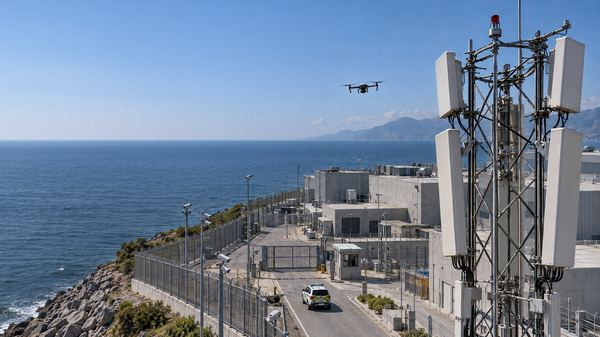
Mobile networks were built to carry calls and data. Ericsson now wants them to watch the sky as well. The Ericsson ISAC System, introduced on November 2 after months of testing, adds sensing to existing 5G networks so defence, public safety and critical infrastructure operators can detect and track low-flying drones — including drones that are not connected to the network at all.
How it works
The system, whose full name is Integrated Sensing and Communication, detects and tracks objects by analysing how radio signals are reflected by objects in the environment. It works as a multi-static system, which means sensing signals are transmitted and received across multiple geographically separate mobile-network sites. Viewing an object from several angles at once gives higher accuracy, stronger detection confidence, better positioning, longer track continuity and more resilient coverage.
Under the hood it combines sensing-capable 5G radios with edge computing, AI and signal processing. It also reuses what is already in place: towers, backhaul and spectrum across cities, transport corridors and strategic locations. Tracking data and AI-based classification can be shared securely through standardised interfaces with authorised external systems, including security and command-and-control systems. Combined with data from other sensors and mitigation platforms, that gives operators a more complete operational picture, helping them respond faster and make better-informed decisions.
In validated tests the system reliably detected and tracked micro drones at kilometre-scale distances, with precise three-dimensional positioning, across a range of operating conditions and flight patterns — though real performance depends on the target, the terrain and the system setup.
Tested on live 5G networks
Ericsson has run the technology through live demonstrations on real networks. A trial with AT&T in Arlington, Texas used sensing dashboards to display drone activity, detecting, locating and tracking multiple drones — a test of how wireless infrastructure could help protect major venues, critical infrastructure and other key locations. A separate demonstration with Erillisverkot in Helsinki showed multiple 5G sites detecting and tracking drones, supporting public safety and counter-UAS operations while extending coverage alongside traditional sensors.
In Poland, Ericsson worked with Asseco and Play to show how the sensing technology, Play’s mobile network and Asseco’s PUSZCZYK acoustic detection system could support detection and positioning of low-flying drones with higher accuracy. The three trials together cover the main use cases: a stadium or venue, a public-safety network, and a layered system where radio sensing and acoustic detection reinforce each other.
What it is for
Ericsson lists four areas where the system fits. In defence and public safety, it strengthens airspace monitoring across borders, coastlines and strategic assets. For critical infrastructure, it adds protection for ports, power plants and other vital sites. In transport and industry, it supports safer operations across road, rail and industrial environments. And in the low-altitude economy, it feeds drone traffic management, urban airspace monitoring and digital twins for smart-city planning and environmental mapping.
A complement to radar, not a replacement
The problem Ericsson is addressing is real. Small, low-cost drones are increasingly used for unlawful surveillance, organised crime, sabotage and warfare, and their size and low-altitude flight behaviour make them hard to detect. Dedicated sensors remain important for protecting critical sites, but scaling them across larger areas is difficult because of the new infrastructure they require.
Ericsson is careful to position ISAC as a complement to radar and other sensors, not a replacement. As Freddie Södergren, Ericsson’s Global Head of Mission Critical Networks and Defense, put it: “Low-flying drones create a detection coverage gap that no single sensor can effectively address.” Mobile Experts analyst Joe Madden said the technology performed better than many expect, and that building on existing sites could deliver wide-area drone detection faster and more cost-efficiently than deploying new sensor infrastructure. Carl Lundqvist, Chief Architect at Swedish Armed Forces HQ, said distributed infrastructure could add an important layer of situational awareness.
Rollout
Commercial introduction will happen in phases. Small-scale, sensing-only commercial pilots with selected customers are expected to begin in 2027, followed by broader-scale deployments from 2028. The integrated communications capability will be added as the solution evolves towards 6G.
Why it matters
Wide-area drone detection is the hardest part of counter-drone work: point sensors protect a fence line, not a city, a border or a coastline. Reusing mobile infrastructure changes the economics of that problem, and it gives network operators a new service to sell from assets they already own. For counter-drone buyers, network-based sensing is becoming a new layer alongside radar, RF detection and jamming — and the 2027 pilots are the moment to watch.
Source: Ericsson