
 العربية
 Русский
 Español
 English
 中文 (简体)
 Português
 اردو
 Türkçe
 فارسی
 हिन्दी
 Français
 Deutsch
 日本語
 한국어
 Afrikaans
 Shqip
 አማርኛ
 Հայերեն
 Azərbaycan dili
 Euskara
 Беларуская
 বাংলা
 Bosanski
 Български
 Català
 Cebuano
 Chichewa
 Corsu
 Hrvatski
 Čeština
 Dansk
 Nederlands
 Esperanto
 Eesti
 Filipino
 Suomi
 Frysk
 Galego
 ქართული
 Ελληνικά
 ગુજરાતી
 Kreyòl Ayisyen
 Hausa
 ʻŌlelo Hawaiʻi
 עברית
 Hmoob
 Magyar
 Íslenska
 Igbo
 Bahasa Indonesia
 Gaeilge
 Italiano
 Basa Jawa
 ಕನ್ನಡ
 Қазақша
 ខ្មែរ
 Kurdî
 Кыргызча
 ລາວ
 Latina
 Latviešu
 Lietuvių
 Lëtzebuergesch
 Македонски
 Malagasy
 Bahasa Melayu
 മലയാളം
 Malti
 Te Reo Māori
 मराठी
 Монгол
 မြန်မာ
 नेपाली
 Norsk
 پښتو
 Polski
 ਪੰਜਾਬੀ
 Română
 Gagana Samoa
 Gàidhlig
 Српски
 Sesotho
 Shona
 سنڌي
 සිංහල
 Slovenčina
 Slovenščina
 Soomaali
 Basa Sunda
 Kiswahili
 Svenska
 Тоҷикӣ
 தமிழ்
 తెలుగు
 ไทย
 Українська
 Oʻzbek
 Tiếng Việt
 Cymraeg
 isiXhosa
 ייִדיש
 Yorùbá
 isiZulu

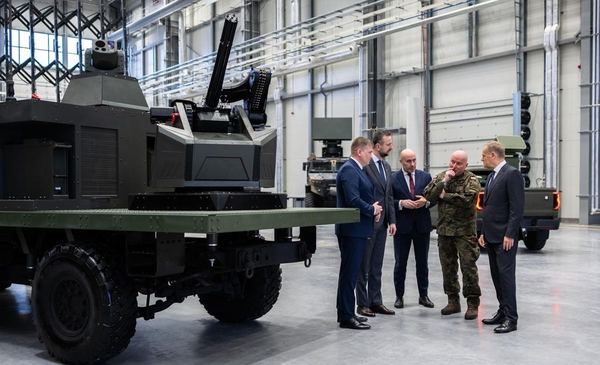
Poland’s EUR 3.5 billion counter-drone programme, known as SAN, is facing its first public questions about delivery. The contract, worth PLN 15 billion and signed on January 30, 2026, covers 18 counter-drone battery modules built by the Polish defence group PGZ with Norway’s Kongsberg Defence & Aerospace and the Polish software company APS. The first systems were expected to reach troops by the end of 2026. Now a Polish newspaper reports they may not arrive until 2027 — and the programme’s defenders insist nothing has slipped.
Why Poland is buying now
Poland sits on NATO’s eastern flank, next to a war in which drones are used every day, and Russian drones have already crossed into Polish airspace. The threat is no longer theoretical: small, cheap aircraft can cross a border, watch a target, or strike one, for a fraction of the cost of the missile that shoots them down. That arithmetic is what drives programmes like SAN. A country that waits until the threat is overhead has already lost the cheap options, so Poland is buying layered drone defence now, at national scale, before it needs it in earnest. The eastern border is where the system will stand first, and it is the border the whole programme is built around.
The delivery question
The report came from Gazeta Wyborcza on November 6. It said the first SAN systems might not reach Polish troops until 2027, later than the end-of-2026 date that had been expected. PGZ responded the same day, saying the programme is running on its agreed schedule. The Defence Ministry gave a more detailed picture: factory acceptance testing of three platoons will be completed before the end of 2026, and physical deliveries to units will begin in 2027. APS chief executive Maciej Klemm had said in October, speaking to the Polish Press Agency, that milestones were on schedule. Read together, the statements describe a programme that is hitting its test dates but whose deliveries start a year later than some had hoped — a difference of emphasis that is easy to turn into a row about delays.
What SAN is
SAN is a layered system, not a single weapon. It integrates radar, electronic warfare, guns, missiles and interceptor drones under one command-and-control system — APS’s SkyView software — so that a cheap drone can be met with the cheapest effective answer rather than the most expensive one. Each battery module is a self-contained unit, with its own sensors and effectors, able to detect, track and defeat drones on its own; Kongsberg supplies PROTECTOR weapon systems, the remote weapon stations already used on vehicles around the world. The idea is scale: 18 battery modules that can be spread along Poland’s eastern border, each one working alone if it has to, and all of them able to work together. Against the small, cheap drones that now fill the sky over Ukraine, that kind of layered, scalable defence is the point of the whole programme.
The pieces around it
The programme is also pulling in suppliers beyond the main contractors. In September, Advanced Navigation signed a EUR 16 million contract to supply navigation systems for Kongsberg platforms — the kind of precise positioning that weapon stations and interceptor drones need to work. Contracts like that show how a single large programme spreads work across the industry, and how the counter-drone market is growing in layers: the big system integrators win the headline deals, and specialist suppliers provide the sensors, navigation and software underneath. The EUR 16 million figure is small against EUR 3.5 billion, but it is the kind of contract that keeps a specialist supplier busy for years.
Why it matters
Poland’s programme is one of the largest counter-drone buys in Europe, and its timeline will be watched by every other country planning the same thing. The lesson so far is a familiar one for defence procurement: factory testing and field delivery are different dates, and the gap between them is where political arguments start. For the counter-UAS industry, SAN is also a benchmark — EUR 3.5 billion for 18 modules sets a price for what layered drone defence costs at national scale, and it shows that governments are now buying drone mitigation the way they used to buy air defence: as a system, not a gadget.
Source: Adria Defense