 العربية
 Русский
 Español
 English
 中文 (简体)
 Português
 اردو
 Türkçe
 فارسی
 हिन्दी
 Français
 Deutsch
 日本語
 한국어
 Afrikaans
 Shqip
 አማርኛ
 Հայերեն
 Azərbaycan dili
 Euskara
 Беларуская
 বাংলা
 Bosanski
 Български
 Català
 Cebuano
 Chichewa
 Corsu
 Hrvatski
 Čeština
 Dansk
 Nederlands
 Esperanto
 Eesti
 Filipino
 Suomi
 Frysk
 Galego
 ქართული
 Ελληνικά
 ગુજરાતી
 Kreyòl Ayisyen
 Hausa
 ʻŌlelo Hawaiʻi
 עברית
 Hmoob
 Magyar
 Íslenska
 Igbo
 Bahasa Indonesia
 Gaeilge
 Italiano
 Basa Jawa
 ಕನ್ನಡ
 Қазақша
 ខ្មែរ
 Kurdî
 Кыргызча
 ລາວ
 Latina
 Latviešu
 Lietuvių
 Lëtzebuergesch
 Македонски
 Malagasy
 Bahasa Melayu
 മലയാളം
 Malti
 Te Reo Māori
 मराठी
 Монгол
 မြန်မာ
 नेपाली
 Norsk
 پښتو
 Polski
 ਪੰਜਾਬੀ
 Română
 Gagana Samoa
 Gàidhlig
 Српски
 Sesotho
 Shona
 سنڌي
 සිංහල
 Slovenčina
 Slovenščina
 Soomaali
 Basa Sunda
 Kiswahili
 Svenska
 Тоҷикӣ
 தமிழ்
 తెలుగు
 ไทย
 Українська
 Oʻzbek
 Tiếng Việt
 Cymraeg
 isiXhosa
 ייִדיש
 Yorùbá
 isiZulu

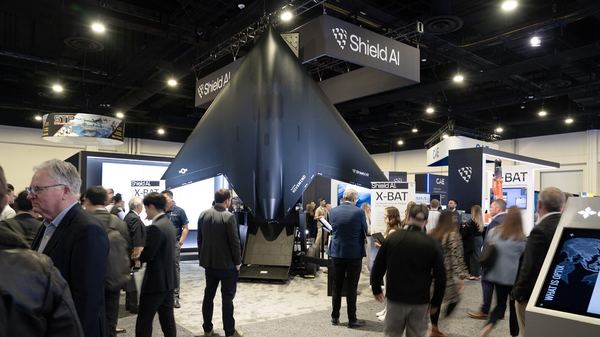
Shield AI is buying its way into counter-drone radar. The defence technology company announced it is acquiring Echodyne, a maker of counter-drone radar systems, in a deal worth $5.3 billion — one of the largest transactions the counter-UAS sector has seen.
What Shield AI is buying
The prize is Echodyne’s MESA radar, short for Metamaterials Electronically Scanned Array. In September the system was selected by the Pentagon’s Joint Interagency Task Force 401 to supply counter-drone systems to the US military, a decision that put Echodyne’s radar at the centre of American military drone defence. Echodyne says its counter-drone systems are used by defence, government and commercial customers in more than 40 countries, and its chief executive, Eben Frankenberg, says hundreds of customers rely on its radars to detect and track drones, protect people and infrastructure, secure borders and keep airspace safe.
For Shield AI the deal fills a gap: the company builds autonomy software and autonomous aircraft, but until now it had no sensor of its own. As Frankenberg put it, autonomous systems can only act on what they can sense. Buying the radar gives Shield AI the sensing half of the equation in-house.
A company built by acquisition
Shield AI has a history of growing by buying. Its V-BAT drone, and the push for the larger X-BAT that followed, came from a 2021 acquisition of Martin UAV. Earlier in 2026 the firm closed its purchase of Aechelon Technologies, a simulation software company. Its autonomy software has been used on multiple Pentagon projects, and the company now hopes to market the X-BAT globally.
Shield AI chief executive Gary Steele said the acquisition dramatically accelerates the company’s efforts to meet growing customer demand for multi-mission capabilities, gives it increased access to a rapidly expanding counter-drone industry, and further diversifies its revenue. He described the company as now having three parts: autonomy software, autonomous systems and mission systems.
Deal terms and what happens next
Of the $5.3 billion price, $4.8 billion will be paid at closing, with another $500 million paid if Echodyne meets specified performance targets. The deal is expected to close in early 2027. Echodyne will operate as a business unit inside Shield AI’s mission systems business, with Frankenberg staying on and reporting to Steele. There are no planned workforce reductions, and Echodyne employees will not be required to relocate.
Shield AI is not announcing any specific aircraft integrations yet, but a company spokesperson noted that autonomous aircraft will need more capable onboard sensors in the coming years, and that Echodyne’s radar is built for that use. The acquisition also adds radar engineering, manufacturing capacity and a commercial customer base to the business. The spokesperson added that the deal has no impact on the recent decision to work with RTX on a radar for the X-BAT, saying that work is separate. Coinciding with the deal, Shield AI raised $2.5 billion through Series H funding from Blackstone and JPMorgan Chase, and the spokesperson said the company will continue to look at acquisitions.
Why it matters
The deal shows the counter-drone market consolidating around full systems rather than single products. Radar, autonomy software and aircraft are merging into one company, and the $5.3 billion price says the market for drone detection and drone mitigation is now big enough to justify that kind of bet. For buyers, the direction is clear: the next generation of counter-UAS offerings will pair sensing and action in a single package, and the suppliers who own both halves will set the terms.
Source: Breaking Defense