
 العربية
 Português
 Русский
 Español
 English
 中文 (简体)
 اردو
 Türkçe
 فارسی
 हिन्दी
 Français
 Deutsch
 日本語
 한국어
 Afrikaans
 Shqip
 አማርኛ
 Հայերեն
 Azərbaycan dili
 Euskara
 Беларуская
 বাংলা
 Bosanski
 Български
 Català
 Cebuano
 Chichewa
 Corsu
 Hrvatski
 Čeština
 Dansk
 Nederlands
 Esperanto
 Eesti
 Filipino
 Suomi
 Frysk
 Galego
 ქართული
 Ελληνικά
 ગુજરાતી
 Kreyòl Ayisyen
 Hausa
 ʻŌlelo Hawaiʻi
 עברית
 Hmoob
 Magyar
 Íslenska
 Igbo
 Bahasa Indonesia
 Gaeilge
 Italiano
 Basa Jawa
 ಕನ್ನಡ
 Қазақша
 ខ្មែរ
 Kurdî
 Кыргызча
 ລາວ
 Latina
 Latviešu
 Lietuvių
 Lëtzebuergesch
 Македонски
 Malagasy
 Bahasa Melayu
 മലയാളം
 Malti
 Te Reo Māori
 मराठी
 Монгол
 မြန်မာ
 नेपाली
 Norsk
 پښتو
 Polski
 ਪੰਜਾਬੀ
 Română
 Gagana Samoa
 Gàidhlig
 Српски
 Sesotho
 Shona
 سنڌي
 සිංහල
 Slovenčina
 Slovenščina
 Soomaali
 Basa Sunda
 Kiswahili
 Svenska
 Тоҷикӣ
 தமிழ்
 తెలుగు
 ไทย
 Українська
 Oʻzbek
 Tiếng Việt
 Cymraeg
 isiXhosa
 ייִדיש
 Yorùbá
 isiZulu

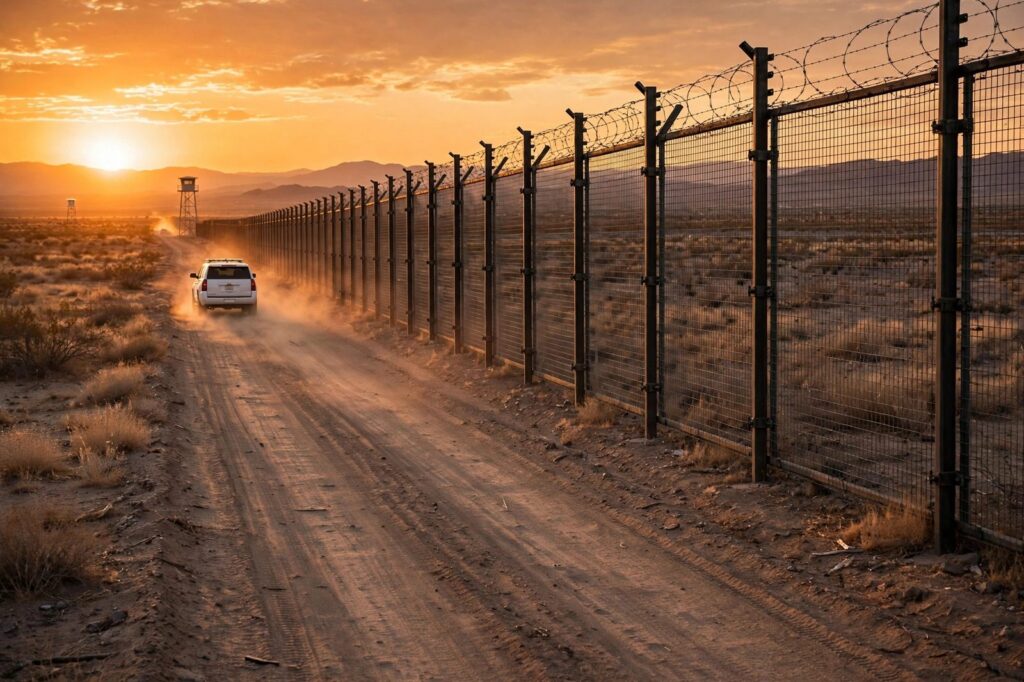
Short answer: Border patrol needs three things that fixed sites do not: detection that covers a long line instead of one point, jamming that moves with the patrol vehicle, and a handheld gun for the drone that is already overhead. A fixed detector at the checkpoint, a vehicle jammer on the patrol SUV, and a detection-jamming-spoofing gun in the operator’s hands covers the line, the road and the moment.
Why a border is different
A border is not a site. It is a line, often tens or hundreds of kilometres long, running through desert, mountains or forest, with long stretches where nobody is watching. The threat is also different: drones cross the line to smuggle, to scout, or to carry a payload to the other side, and they do it at night, low, and far from any road.
That rules out a purely fixed system. A fixed detector protects the ground it can see, and a border has far more ground than any reasonable number of fixed units can cover. It also rules out a purely portable system: a handheld cannot watch a 50 km sector while the patrol is somewhere else. The answer is a mix, with each tool covering what the others cannot.
The three tools
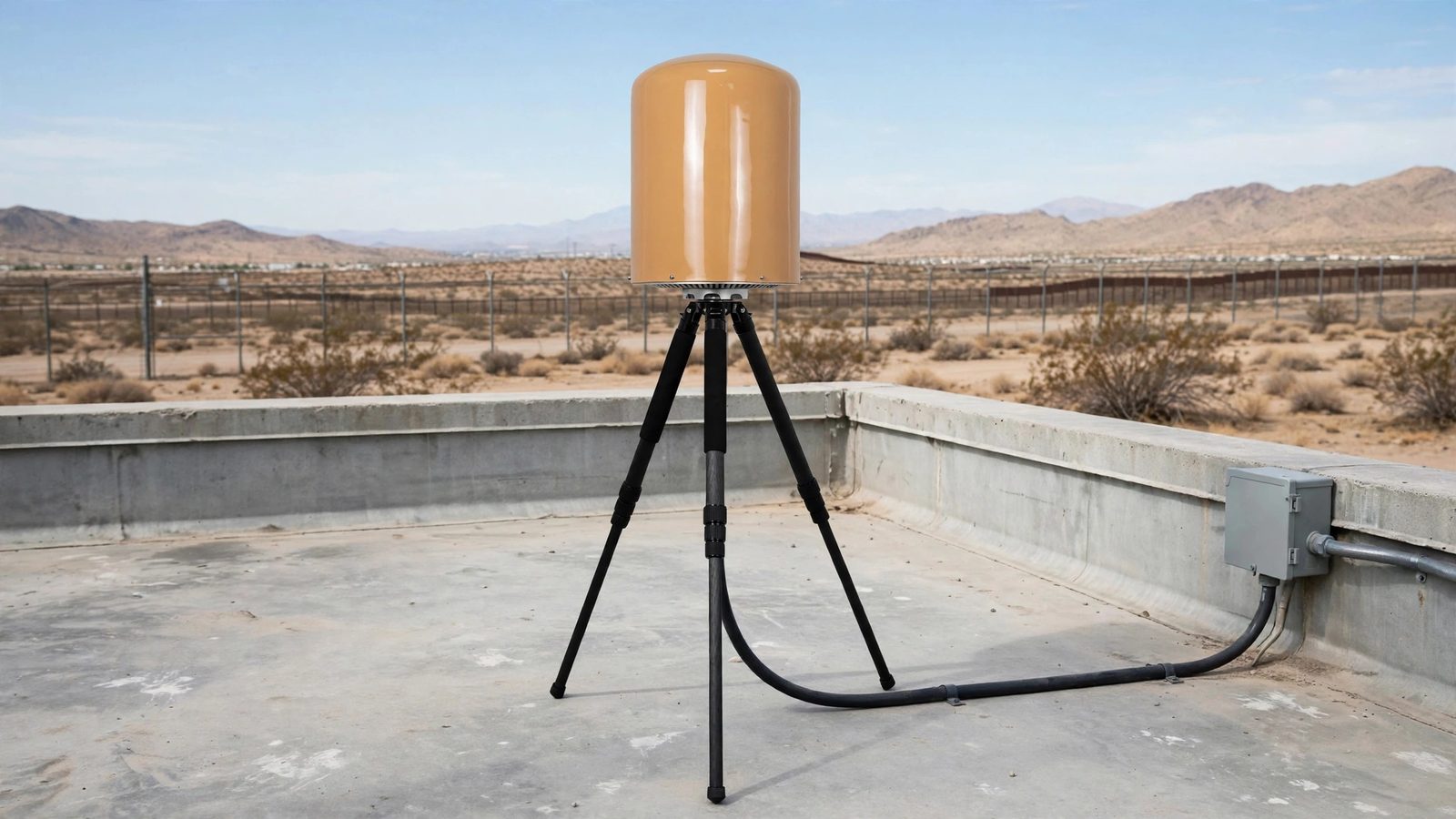
1. Fixed detection at the checkpoint: DF-10G
The APX-DF-10G is a fixed detection unit for the places on a border that do have infrastructure: the checkpoint, the crossing, the base, the depot. It covers 70 MHz to 10 GHz, detects drones at 5 km or more, and at 10 km or more in a good electromagnetic environment. It tracks 30 or more targets at once, gives direction to 15 degrees RMS or better, and responds within 3 seconds. It covers 360 degrees including directly overhead, is IP66 rated, weighs 15 kg or less, and runs on mains power.
Put it on the watchtower or the checkpoint roof and it watches the crossing continuously, day and night, with no operator. It is the early warning for the one place on the line where people and vehicles actually pass.
2. Mobile jamming on the patrol vehicle: JV-8B
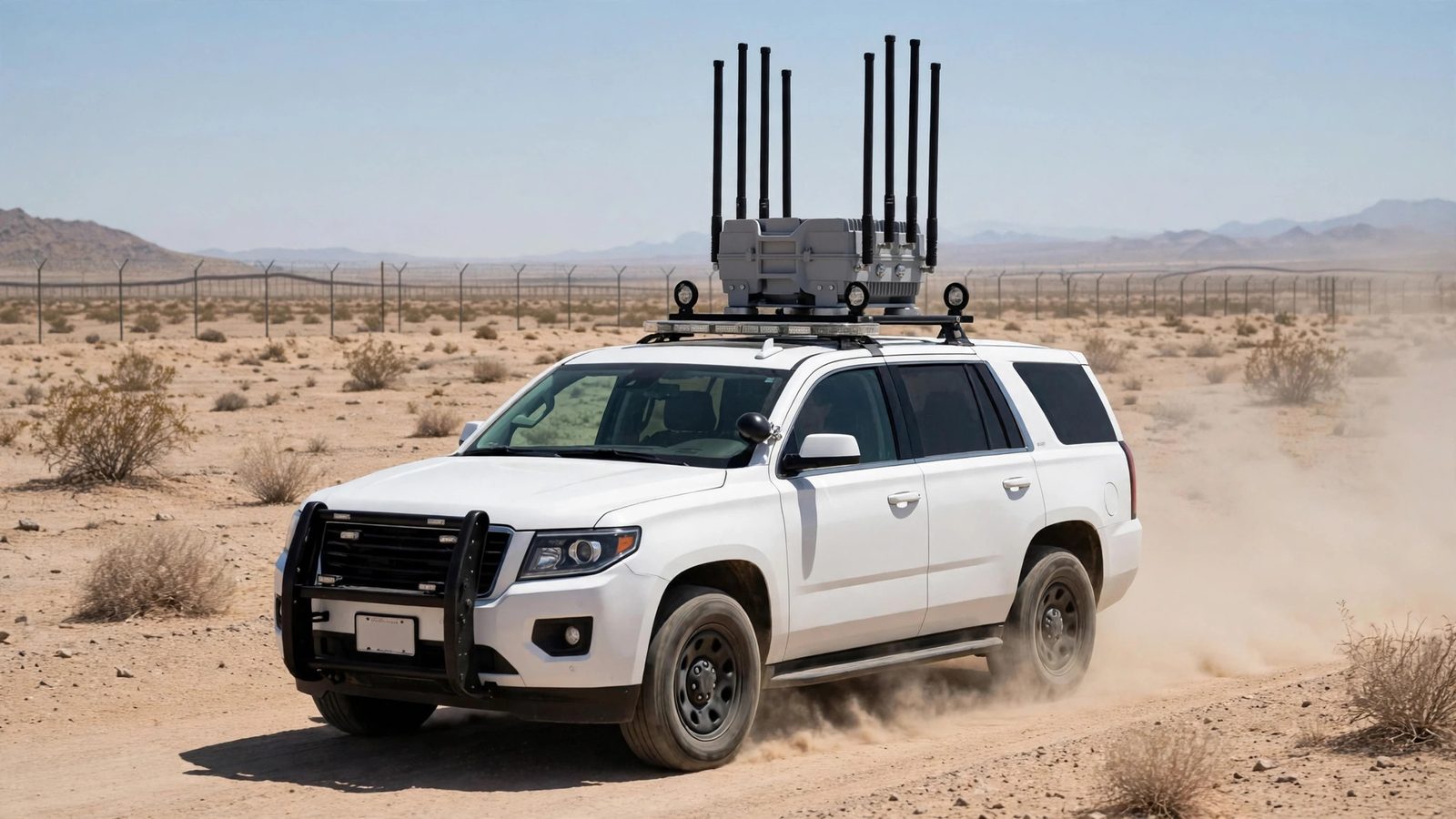
The APX-JV-8B is a vehicle-mounted jammer. It covers 8 bands — 500 to 1,000 MHz in slices, plus 2.4, 5.2 and 5.8 GHz — and delivers 300 to 400 W omnidirectionally, jamming up to 2 km. It is IP65 rated and runs from a 24 V DC vehicle supply, or 220 V AC through an adapter.
It mounts on the patrol vehicle’s roof, on magnetic feet, and turns the vehicle into a mobile counter-drone unit. While the patrol drives the line, the JV-8B screens the column in every direction at up to 2 km. A drone that approaches the patrol to watch it, or that crosses the line near the road, is jammed before it can complete its run. The vehicle is the coverage: wherever the patrol goes, the jamming goes with it.
3. The gun in the operator’s hands: DJSH-8B
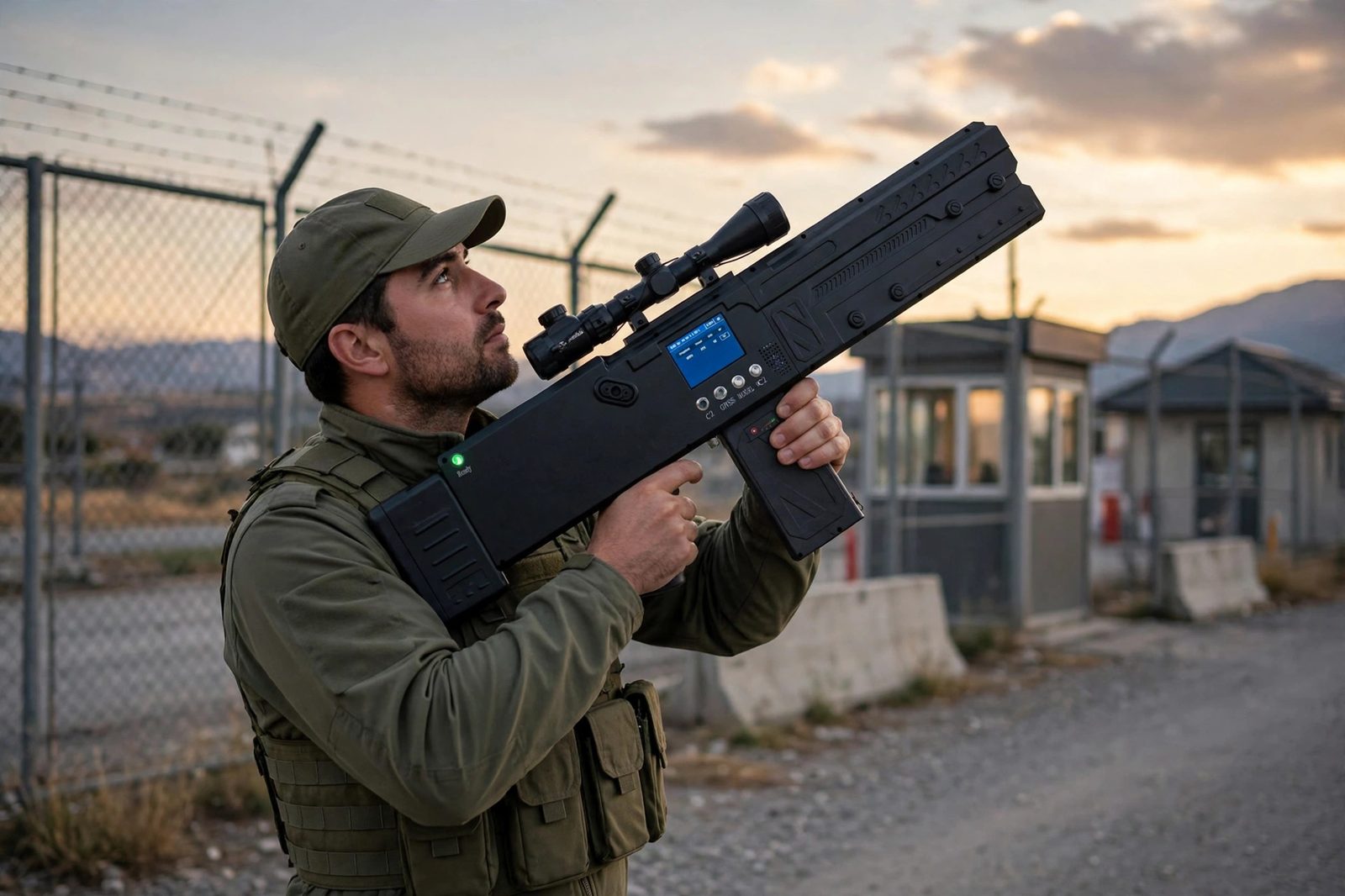
The APX-DJSH-8B is a handheld detection, jamming and spoofing gun. It detects across 300 MHz to 6.2 GHz at 1 km or more, jams on 8 bands at 180 W out to 800 to 1,500 metres, and adds GNSS spoofing with emergency landing and no-fly modes. It weighs 5.5 kg, is IP54 rated, and runs on a removable battery.
The gun is for the moment the other two tools cannot handle: a drone is already overhead, or crossing a sector where there is no fixed detector and the vehicle is somewhere else. The operator points, confirms the threat on the screen, and fires. Detection, jamming and spoofing in one device means the operator does not have to choose between tools while the drone is already in the air.
Comparison
| DF-10G | JV-8B | DJSH-8B | |
|---|---|---|---|
| Role | Fixed detection | Vehicle jamming | Handheld detection + jamming + spoofing |
| Frequency | 70 MHz–10 GHz | 8 bands, 500 MHz–5.95 GHz | 300 MHz–6.2 GHz |
| Detection range | ≥5 km, 10 km+ in a good EM environment | — | ≥1 km |
| Jamming range | — | Up to 2 km, omni, 300–400 W | 800–1,500 m, 8 bands, 180 W |
| Spoofing | — | — | Yes, emergency landing + no-fly |
| Coverage | 360°, including overhead | Every direction around the vehicle | Where the operator aims |
| Power | Mains, 75 W | 24 V DC vehicle supply | Removable battery |
| Weight | ≤15 kg, installed | Vehicle-mounted | 5.5 kg |
| Protection | IP66 | IP65 | IP54 |
| Best for | The checkpoint, 24/7 | The patrol route | The drone that is already there |
How they work together
The checkpoint detector watches the crossing and raises the alarm with a direction. The patrol vehicle, carrying the JV-8B, moves to the sector the alarm points to, and its 2 km jamming bubble covers the ground the patrol is driving through. If the drone is already overhead or the vehicle cannot get close enough, the operator steps out with the DJSH-8B and stops it directly, with jamming and spoofing in one device.
The key is that no single tool covers a border. Fixed covers the point. The vehicle covers the road. The gun covers the moment. A border team that buys only one of the three will have a gap exactly where the threat goes.
FAQs
Can one fixed detector cover a border sector?
No. A DF-10G detects at 5 km or more, which sounds like a lot, but a border sector is tens of kilometres long. One fixed unit covers one point on the line. Covering a sector with fixed units alone would take more units than any budget allows. The vehicle and the gun exist to cover the ground between the fixed points.
Why a vehicle jammer instead of more fixed jammers?
Because the patrol moves and the threat moves with it. A fixed jammer protects the airspace around where it is mounted. A vehicle jammer protects a 2 km bubble that travels with the patrol, covering the road, the column and the sector the patrol is actually in. For a border, where the line is long and the patrol is the coverage, the vehicle is the right platform.
What if the drone is already overhead when the patrol arrives?
That is what the gun is for. The DJSH-8B detects at 1 km or more, jams at 800 to 1,500 metres, and spoofs with emergency landing and no-fly modes. The operator does not need the vehicle or the fixed detector to act. Point, confirm, fire — the drone is stopped before it finishes its crossing.