
 العربية
 Português
 Русский
 Español
 English
 中文 (简体)
 اردو
 Türkçe
 فارسی
 हिन्दी
 Français
 Deutsch
 日本語
 한국어
 Afrikaans
 Shqip
 አማርኛ
 Հայերեն
 Azərbaycan dili
 Euskara
 Беларуская
 বাংলা
 Bosanski
 Български
 Català
 Cebuano
 Chichewa
 Corsu
 Hrvatski
 Čeština
 Dansk
 Nederlands
 Esperanto
 Eesti
 Filipino
 Suomi
 Frysk
 Galego
 ქართული
 Ελληνικά
 ગુજરાતી
 Kreyòl Ayisyen
 Hausa
 ʻŌlelo Hawaiʻi
 עברית
 Hmoob
 Magyar
 Íslenska
 Igbo
 Bahasa Indonesia
 Gaeilge
 Italiano
 Basa Jawa
 ಕನ್ನಡ
 Қазақша
 ខ្មែរ
 Kurdî
 Кыргызча
 ລາວ
 Latina
 Latviešu
 Lietuvių
 Lëtzebuergesch
 Македонски
 Malagasy
 Bahasa Melayu
 മലയാളം
 Malti
 Te Reo Māori
 मराठी
 Монгол
 မြန်မာ
 नेपाली
 Norsk
 پښتو
 Polski
 ਪੰਜਾਬੀ
 Română
 Gagana Samoa
 Gàidhlig
 Српски
 Sesotho
 Shona
 سنڌي
 සිංහල
 Slovenčina
 Slovenščina
 Soomaali
 Basa Sunda
 Kiswahili
 Svenska
 Тоҷикӣ
 தமிழ்
 తెలుగు
 ไทย
 Українська
 Oʻzbek
 Tiếng Việt
 Cymraeg
 isiXhosa
 ייִדיש
 Yorùbá
 isiZulu
Counter-UAS Systems
Detect, Jam and Spoof Hostile Drones
A counter-UAS system does one job: it finds drones that should not be there, works out what they are doing, and stops them.
RF Apex builds counter-UAS systems in three layers — detection, jamming and spoofing — so a site can start with one layer and add the others as the threat grows. Every layer is available as handheld, fixed and backpack equipment, and the layers are designed to work together as a single system.
01 · Detection
Detection: find the drone first
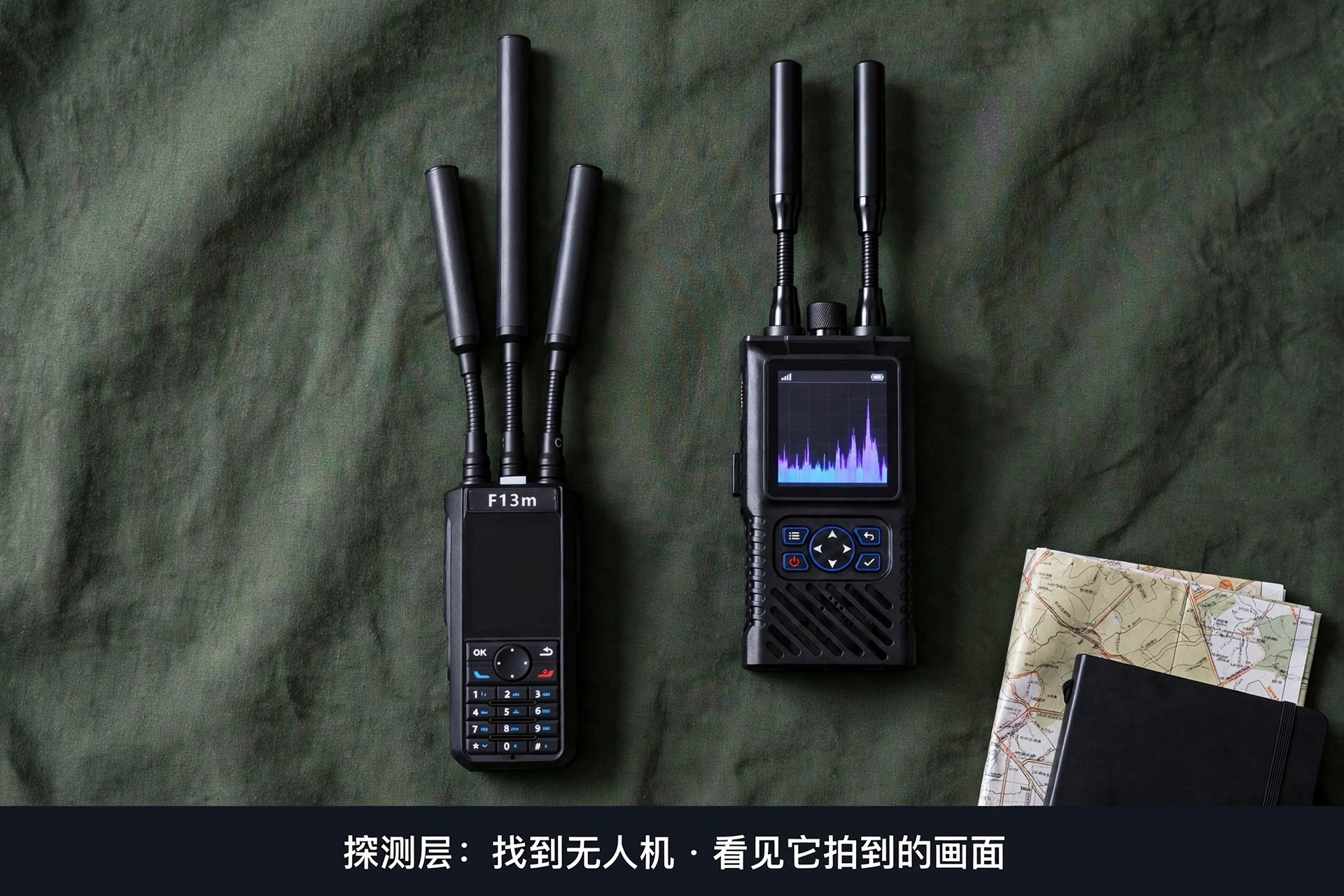
Detection is where every counter-UAS deployment starts. A detector sweeps the radio spectrum, picks out drone control and video signals, and tells the operator the frequency, the signal strength and, where the signature is known, the drone type.
The F13M (APX-DH-13G) handheld detector sweeps 300 MHz to 13.4 GHz in 1 MHz steps and identifies more than 100 drone types by signal signature, at up to 5 km, with a sensitivity of −101 dBm. It receives Remote ID under GB, ASTM and EU standards, has a swappable battery, is rated IP54, and carries a countermeasure interface so it can hand over to a jammer when a drone is confirmed.
The APX-DW01 handheld takes a different approach to the same problem: it sweeps 0–8 GHz and decodes the drone’s analog FPV video feed in real time, showing it on its own built-in screen. The operator sees what the drone’s camera sees — whether it is filming a facility, a crowd or an empty field — instead of only knowing that a signal exists. Typical detection distance is 1 km or more, and the device recognises both OFDM digital video links from mainstream drones such as DJI and Autel and FM analog video from DIY FPV drones.
For fixed sites, the APX-DF-10G covers 70 MHz to 10 GHz with detection up to 10 km and direction finding accurate to ≤15° RMS, with a RESTful API for integration into a command centre. It is the fixed detection layer for airports, borders and large facilities that need continuous, unattended coverage.
02 · Jamming
Jamming: stop the drone once it is found
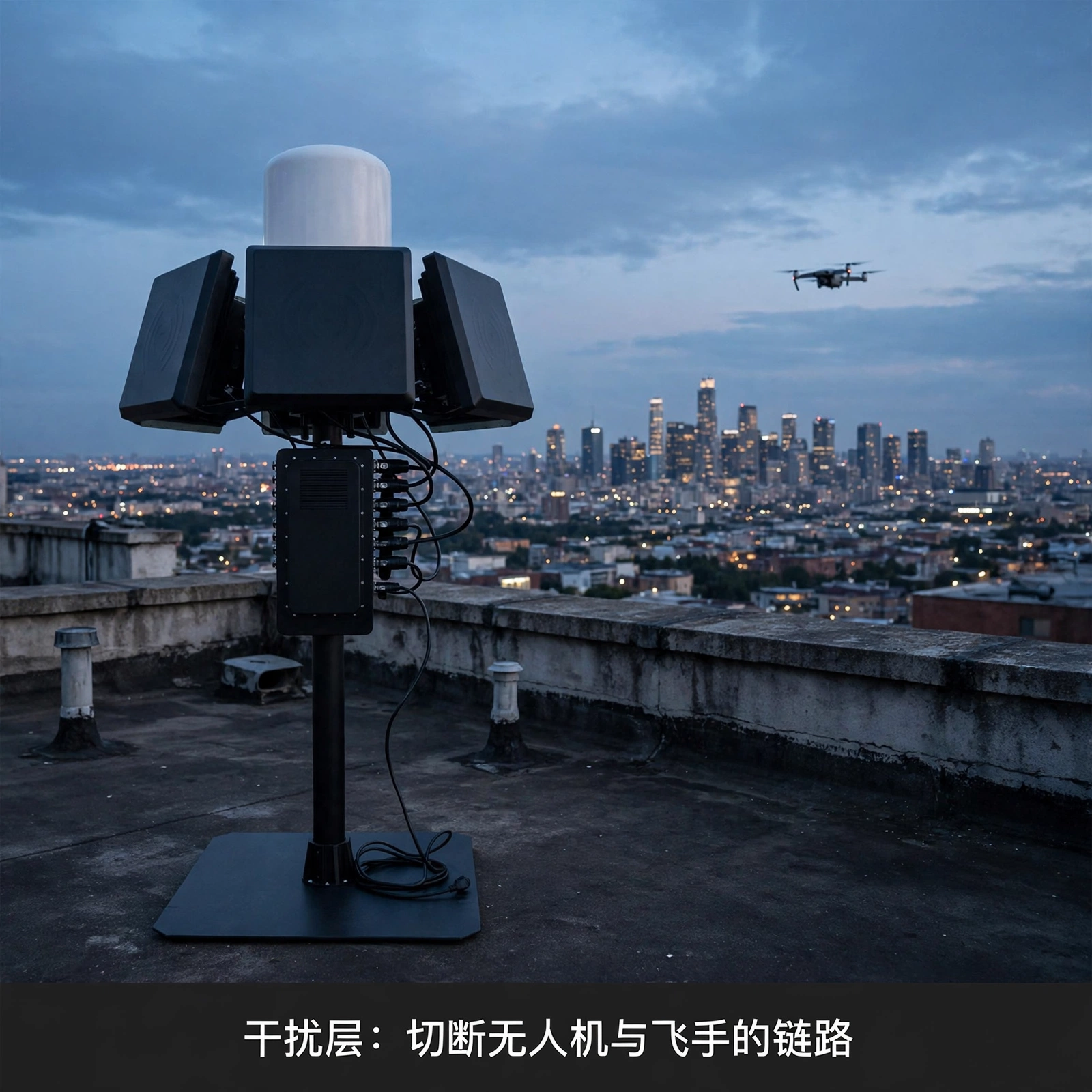
Detection without a response is only half a system. Jamming breaks the link between the drone and its operator, forcing it to land, return home or hover until its battery runs out.
The APX-DJF-Hex8B is a six-sided fixed system that combines detection and jamming in one unit: it detects across 70 MHz to 6 GHz at 5 km or more and jams directionally over 2–3 km, in an IP66 housing built for permanent outdoor installation. For mobile teams, the APX-JH-8B is an eight-band handheld jammer that a single operator can carry and aim, and the APX-JF-8B is its fixed-site counterpart for protecting a building or a perimeter around the clock.
03 · Spoofing
Spoofing: take control of where the drone thinks it is
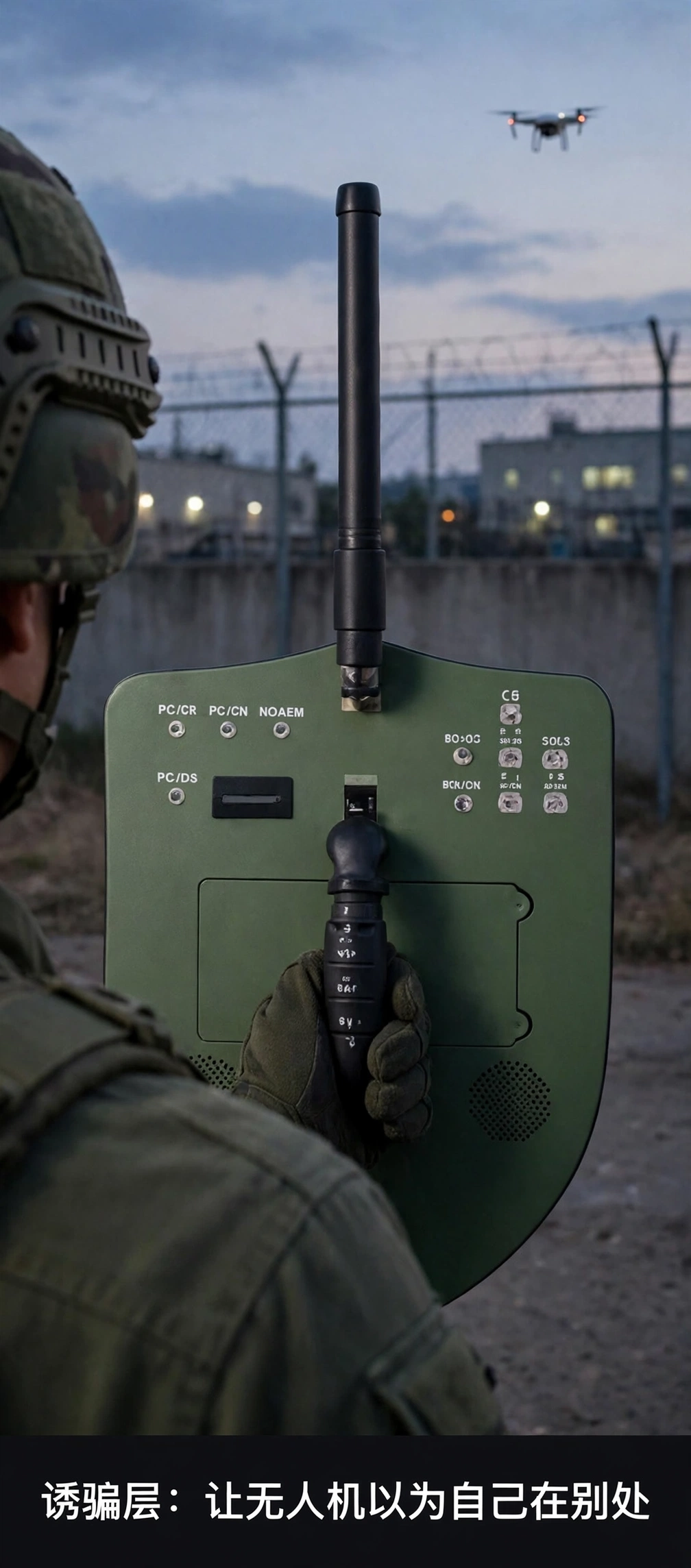
Spoofing is the third layer. Instead of breaking the drone’s link, a spoofer feeds it false satellite navigation signals, so the drone believes it is somewhere it is not — and lands, returns or stays out of the protected area on its own.
The APX-SH-GNSS is a handheld spoofer covering GPS, BeiDou, GLONASS and Galileo over 1 km, in a 5 kg IP54 handheld at 15 W. The APX-SF-GNSS is the fixed version for permanent sites, a 70 W unit rated IP65 with spoofing range up to 1 km. Spoofing is used where jamming alone is not enough, or where a site needs drones to leave the area without being forced down inside it.
Combined systems
Detection, jamming and spoofing in one unit
For teams that need all three layers in a single piece of equipment, the APX-DJSB-8B backpack combines detection, jamming and spoofing in one portable system. One operator carries the whole counter-UAS capability — find the drone, jam its link, spoof its navigation — without waiting for a fixed installation or a second device.
Building a counter-UAS system for your site
There is no single counter-UAS configuration that fits every site. An airport needs fixed wide-area detection and directional jamming; a border patrol needs handheld detection with video confirmation; a government compound may need spoofing to keep drones out without dropping them on the building. The starting point is always the same: what is the site, what is the threat, and how far away must a drone be detected. RF Apex counter-UAS systems are built from the same detection, jamming and spoofing layers in every case — handheld for patrols, fixed for perimeters, backpack for mobile teams — so a system can start small and grow with the site.